
Ultrasound and Biopsy: Two Tests That Work Together
Ultrasound shows us where the problem is and how large it is. A biopsy can help us understand why the problem is happening. Together, they provide a clearer diagnosis for safer, more effective treatment.

Ultrasound assessment
Ultrasound has changed the way I assess complications after aesthetic treatments. In some cases, however, a biopsy can be just as important.
Ultrasound allows us to see what is happening under the skin in real time. It can help us find injected products and show swelling, inflammation, scar tissue, changes in blood vessels, or small areas of fluid.
However, ultrasound mainly shows us the shape and condition of the tissues. It does not always explain exactly what is happening inside the tissue at a microscopic level.
The role of biopsy
This is where a biopsy can help.
A biopsy involves taking a very small sample of tissue and examining it under a microscope. This can help us understand whether there is inflammation, infection, a reaction to an injected product, scar tissue, or another medical condition.
Complementary diagnostic tools
Ultrasound and biopsy do not replace each other. They provide different types of information and can work together.
Ultrasound helps us understand where the problem is, how large it is, and whether it is changing over time. A biopsy can help us understand why the problem is happening.
This can be especially useful when a patient has swelling, lumps, pain, hard tissue, facial asymmetry, or symptoms that do not improve as expected.
Clinical guidance
Ultrasound may also help us choose the safest and most useful area from which to take the biopsy sample.
For me, using both tools can be very important in complex cases. Aesthetic complications should not be treated only according to what we can see or feel from the outside. Sometimes we need to look beneath the skin and also understand what is happening inside the tissue.
A clearer diagnosis allows us to choose a treatment that is safer, more personal, and more effective.
About the author
Dr Macarena Olivares MD PhD is a specialist in Regenerative Medicine and Aesthetic Medicine based in Chile.
Seguir leyendo
Todos los artículos
 Patient guide
Is my filler still there? What an ultrasound scan shows
Wondering if your dermal filler is still present or has migrated? Ultrasound scans offer a clear, non-invasive way to visualize your fillers and make informed decisions about your care.

 Patient guide
Filler lumps and nodules: what an ultrasound scan reveals
Discover how ultrasound technology helps patients and practitioners understand dermal filler lumps and nodules for informed decision-making.

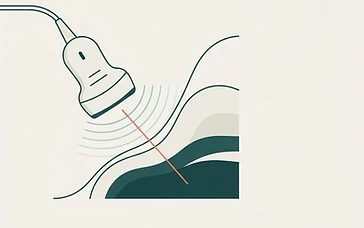 Patient guide
Ultrasound-guided filler injection: what patients should know
Discover how ultrasound technology is enhancing safety in aesthetic medicine by allowing practitioners to visualize facial anatomy during dermal filler procedures.